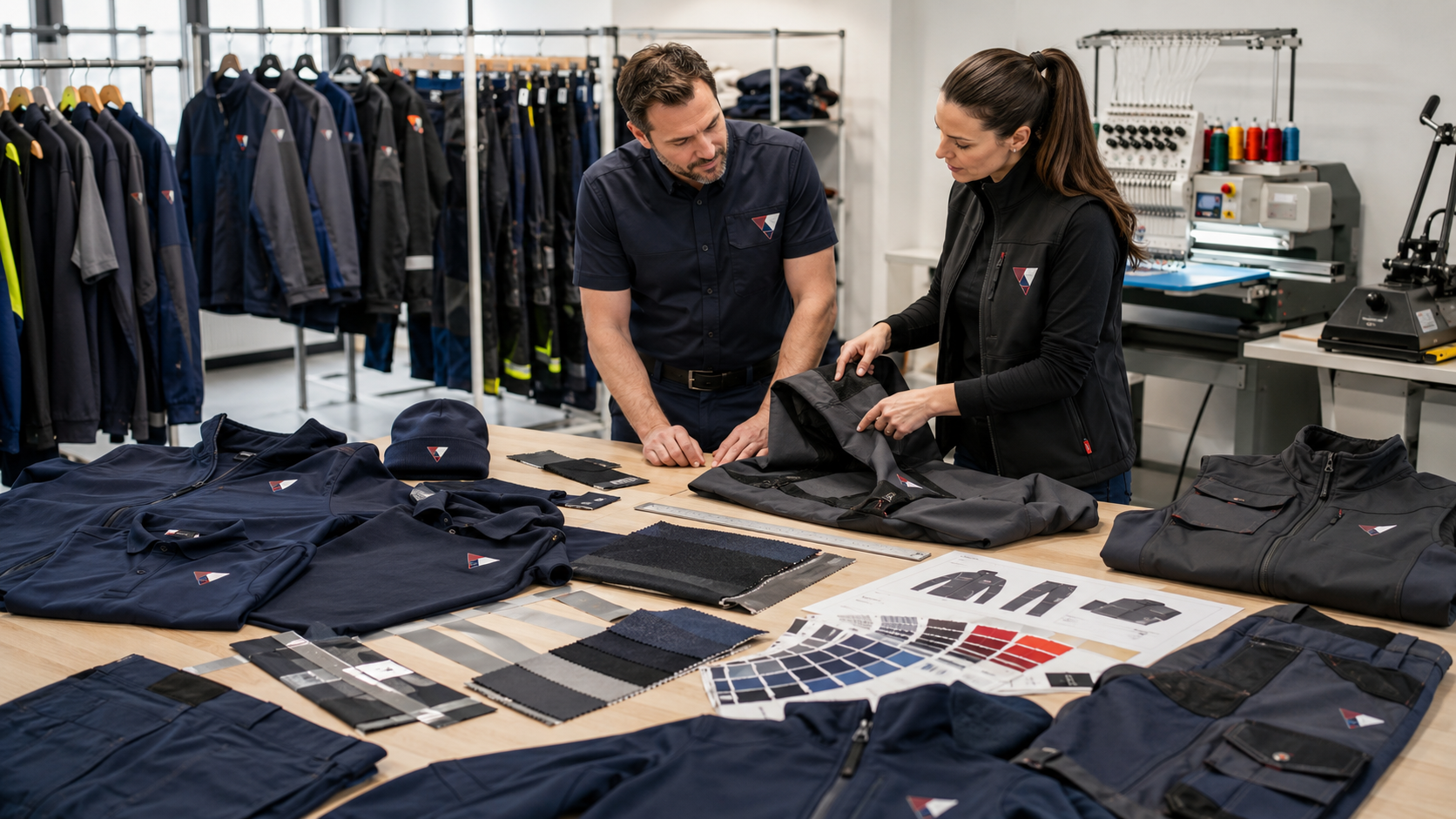
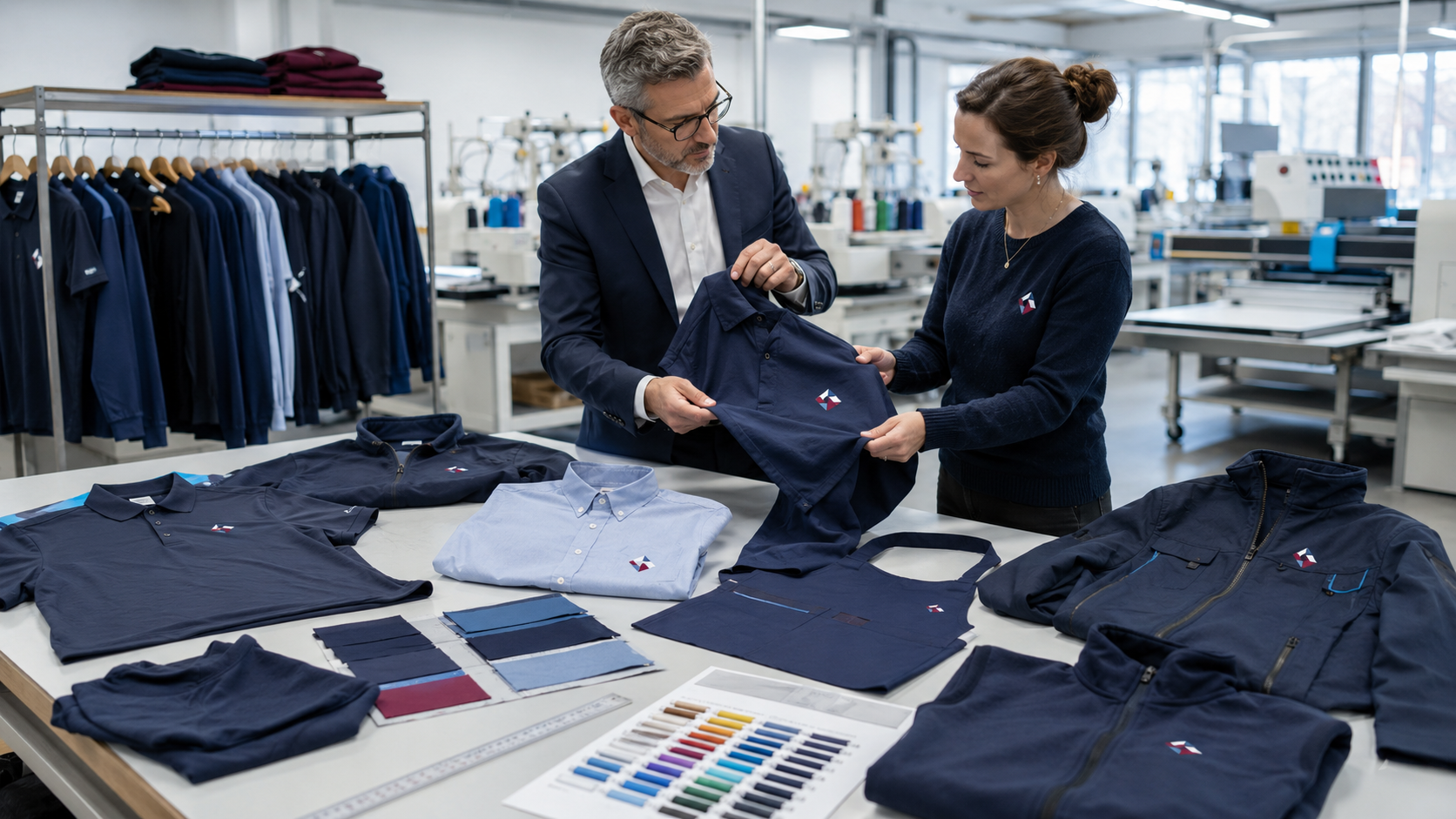
Embroidery or textile printing: which technique should you choose?
Find out which technique to choose based on your fabric, your logo...

Embroidery or textile printing: which technique should you choose?
Choosing between embroidery and textile printing is a common question when a company, association, club, or event organizer wants to customize clothing.
Embroidery provides a premium, durable, and professional finish. Textile printing allows for more graphic freedom, particularly for colorful visuals, large formats, or detailed designs. Between the two, the right choice depends on the textile, the logo, the quantity, the budget, the lead time, and the image you wish to convey.
At Empreintex, we guide professionals in choosing the most suitable technique: embroidery, textile printing, DTF, screen printing, or heat transfer. The goal is not just to mark a garment. The goal is to achieve a clean, durable result that is consistent with your intended use.
Embroidery or textile printing: the main difference
Embroidery consists of reproducing a logo or text with thread stitched directly into the fabric. The result is raised, durable, and high-quality.
Textile printing consists of applying a visual to the garment using a suitable printing technique: screen printing, DTF, heat transfer, or another process depending on the material and the expected result.
The difference is immediately apparent:
- embroidery provides a more high-end finish;
- printing allows for more detail, colors, and formats;
- embroidery is better suited for simple logos;
- printing is better suited for complex visuals;
- embroidery is ideal for professional clothing;
- printing is often more suitable for event or promotional t-shirts.
There is therefore no single solution that is best in every case. Above all, there is a solution adapted to each project.
When should you choose embroidery?
Embroidery is recommended when brand image, durability, and a premium finish are the priorities.
It is particularly suitable for professional clothing worn regularly, such as polo shirts, jackets, sweatshirts, caps, softshells, shirts, or reception wear.
Embroidery gives an impression of quality. It stands the test of time well and maintains a professional appearance even after many washes, provided that the textile and the logo are suitable.
Embroidery is ideal for:
- corporate polo shirts;
- softshell jackets;
- professional sweatshirts;
- caps;
- shirts;
- reception wear;
- uniforms;
- workwear;
- staff clothing;
- left-chest logos.
For a company, embroidery is often the best choice when the garment is intended to be worn frequently by employees.
The advantages of embroidery
Embroidery offers several significant advantages.
A high-end finish
An embroidered logo provides a more premium feel than standard printed branding. The raised thread, texture, and finish enhance the perception of quality.
This is particularly relevant for businesses looking to polish their image: hospitality, catering, real estate, construction, events, services, industry, corporate offices, premium clubs, or customer-facing roles.
Excellent durability
Embroidery is highly durable. It stands up well to regular use and repeated washing.
For workwear, jackets, or polo shirts, it is a reliable choice when the garment needs to last.
A professional finish
On a polo shirt, jacket, or cap, embroidery provides a clean, understated, and professional look.
It is often perceived as higher quality than printing, especially on thick or premium fabrics.
The limitations of embroidery
Embroidery is not suitable for every project.
It is less suitable for large designs
For a large logo on the back or a very wide design, embroidery can become heavy, stiff, and expensive. In such cases, textile printing is often more appropriate.
It is not ideal for very fine details
Small text, gradients, shadows, photographic effects, or complex details are difficult to reproduce with embroidery.
A logo with too much detail may sometimes need to be simplified before it can be embroidered.
It can be less comfortable on certain t-shirts
On a thin t-shirt, a large embroidery can be less comfortable to wear. For a small logo on the chest, it works well. For a large design, printing generally remains the better option.
When should you choose textile printing?
Textile printing is recommended when the design is colorful, detailed, large-format, or intended for a one-off event.
It is very well suited for t-shirts, sweatshirts, tote bags, promotional clothing, sportswear, or textiles intended for communication campaigns.
Depending on the project, several techniques can be used: DTF, screen printing, flocking, or specific printing methods based on the textile.
Textile printing is ideal for:
- custom t-shirts;
- sweatshirts with large logos;
- back designs;
- detailed graphic creations;
- events;
- promotional campaigns;
- associations;
- clubs;
- multi-coloured textiles;
- small and medium runs using DTF;
- large runs using screen printing.
Textile printing offers more graphic freedom than embroidery. It allows for the reproduction of complex logos, solid colours, illustrations, or more creative designs.
The advantages of textile printing
Greater graphic freedom
Printing allows for the reproduction of logos with multiple colours, fine details, complex shapes, or larger visuals.
For event designs or graphic creations, it is often more suitable than embroidery.
Suitable for large formats
A large logo on the back, a visual on the chest, or a sleeve print are generally easier to achieve with textile printing than with embroidery.
A great solution for t-shirts
For custom t-shirts, printing is often the most logical choice, especially if the visual is large or detailed.
Cost-effective based on quantity
Depending on the chosen technique, textile printing can be very attractive for small, medium, or large runs.
DTF is often flexible for small and medium runs. Screen printing becomes very cost-effective as quantities increase and the design uses fewer colours.
The limitations of textile printing
Textile printing must be chosen carefully according to the material.
Stretchy, polyester, technical, or dark fabrics may require a specific approach. Some materials require an underlay, a suitable base, or special precautions to ensure the durability of the print.
The final result also depends on the quality of the file provided. A blurry or low-resolution logo will rarely produce an optimal result.
Printing can be very durable if the right technique is used, but it remains different from embroidery. For certain professional garments subject to heavy wear, embroidery may be a more suitable option.
DTF, screen printing, heat transfer: what are the differences?
Textile printing encompasses several techniques. The choice depends on the visual, the quantity, and the fabric.
DTF: flexible and precise
DTF is a highly effective solution for colorful visuals, small to medium runs, detailed logos, and projects requiring good flexibility.
It is well-suited when the design contains multiple colors or when the quantity does not justify the setup required for screen printing.
Screen printing: efficient for large runs
Screen printing is particularly well-suited for large quantities and simple visuals with few colors.
It offers a crisp, professional, and durable finish. It becomes more cost-effective as the quantity increases.
Heat transfer: visible and effective
Heat transfer is often used for names, numbers, sportswear, individual markings, or simple logos.
It provides a clear and bold finish. It is a relevant choice when the need is straightforward: identifying, numbering, or clearly personalizing a garment.
Quick comparison: embroidery or textile printing?
This table provides general guidance. The final choice always depends on the fabric, the logo, the volume, and the intended use.
Which technique should you choose based on the garment?
T-shirt
For a T-shirt, textile printing is often the most suitable solution, especially for large visuals or detailed designs.
Embroidery can be used for a small logo on the chest, but it should remain reasonable in size to maintain the garment's comfort.
Polo shirt
For a polo shirt, embroidery is generally the best choice. It enhances the professional look and provides a higher-quality finish.
This is a widely used solution for businesses, restaurants, hotels, clubs, and sales teams.
Sweatshirt
For a sweatshirt, both solutions are possible.
Embroidery works well for a premium logo on the chest. Textile printing is better suited for a large design on the back or a graphic creation.
Softshell jacket
For a softshell jacket, embroidery is often preferred for a high-end finish. Depending on the material, printing can also be considered, but it must be technically validated.
Cap
Embroidery is generally the most suitable solution for a cap. It provides a clean, durable, and professional look.
Workwear
For workwear, the choice depends on the intended use. Embroidery is highly durable and adds value. Printing may be more suitable for large designs, back logos, or technical fabrics.
Which technique should you choose based on your logo?
Simple logo
A simple logo with few details and a clear shape can be either embroidered or printed.
If the goal is a premium look: embroidery.
If the goal is budget-friendly, large format, or for an event: printing.
Highly detailed logo
A highly detailed logo is often better suited for textile printing, particularly DTF.
Embroidery sometimes requires simplifying the logo to ensure a clean result.
Logo with gradients or effects
Gradients, shadows, photo effects, or complex textures are better suited to printing than embroidery.
In embroidery, these effects often need to be interpreted, simplified, or removed.
Small text
Small text can be problematic in embroidery if the letters are too thin. For good readability, the size of the branding must be adjusted, and the content sometimes simplified.
Which technique should you choose based on your brand image?
The technical choice directly influences how the garment is perceived.
Embroidery provides a more institutional, premium, and durable image. It is very well-suited for companies looking to outfit their teams with professional clothing.
Textile printing offers a more graphic, visible, and flexible image. It is ideal for events, campaigns, associations, clubs, or clothing collections.
For a brand, company, or event, the right choice therefore depends on the message you want to convey:
- serious and premium: embroidery;
- visibility and creativity: textile printing;
- large quantities: screen printing;
- individual personalization: heat transfer;
- colorful or detailed logo: DTF.
How can you avoid errors before production?
Before starting textile production, it is important to verify several points.
Check the logo file
A vector logo is highly recommended. AI, EPS, SVG, or vector PDF formats allow for better preparation.
A PNG file may be suitable in some cases if it is high resolution, but it must be verified.
Check the textile
Not all textiles react the same way. Cotton, polyester, stretch fabrics, softshells, or technical textiles sometimes require different approaches.
Check the branding size
A logo that is too small may lose readability. A logo that is too large can be uncomfortable in embroidery or visually overwhelming.
Check the end use
An event t-shirt, a work jacket, and a reception polo shirt do not have the same requirements.
Technical choices should always be based on how the garment will actually be used.
Embroidery or textile printing: which solution is more durable?
Embroidery is generally considered one of the most durable techniques, especially for professional clothing, polo shirts, jackets, and caps.
Textile printing can also be durable if chosen correctly and applied well. Longevity depends on the technique, the fabric, care, and usage.
For a garment worn very regularly, embroidery is often an excellent choice. For an event t-shirt, a large visual, or a colorful design, textile printing is usually more suitable.
Embroidery or textile printing: which solution is cheaper?
There is no single answer.
Embroidery can be more expensive, especially if the logo is large or complex. But it provides a premium, durable finish.
Textile printing can be more economical depending on the quantity, number of colors, format, and technique used.
For a large run with a simple visual, screen printing can be very competitive. For a small, colorful run, DTF may be more suitable. For a chest logo on a premium polo, embroidery can offer the best value for money.
The right choice is not necessarily the lowest price. It is the best balance between appearance, durability, budget, and usage.
Conclusion: choosing the right technique for your project
Embroidery and textile printing meet different needs.
Embroidery is ideal for a premium, durable, and professional look. It is particularly suitable for polo shirts, jackets, caps, sweatshirts, and corporate clothing.
Textile printing is more flexible for t-shirts, large visuals, detailed designs, events, and promotional runs.
DTF is attractive for colorful logos and small to medium runs. Screen printing is effective for large quantities. Heat transfer remains relevant for names, numbers, and visible markings.
To choose correctly, you must analyze the fabric, the logo, the quantity, the budget, the deadline, and the final use.
At Empreintex, we advise you on the most suitable technique to achieve a professional, durable result that is consistent with your image.